- +91 9501032237
- support@globalchildwellness.com
- 127, I - Block, Sarabha Nagar, Ludhiana, Punjab 141002
- +91 9501032237
- support@globalchildwellness.com
- 127, I - Block, Sarabha Nagar, Ludhiana, Punjab 141002
Search

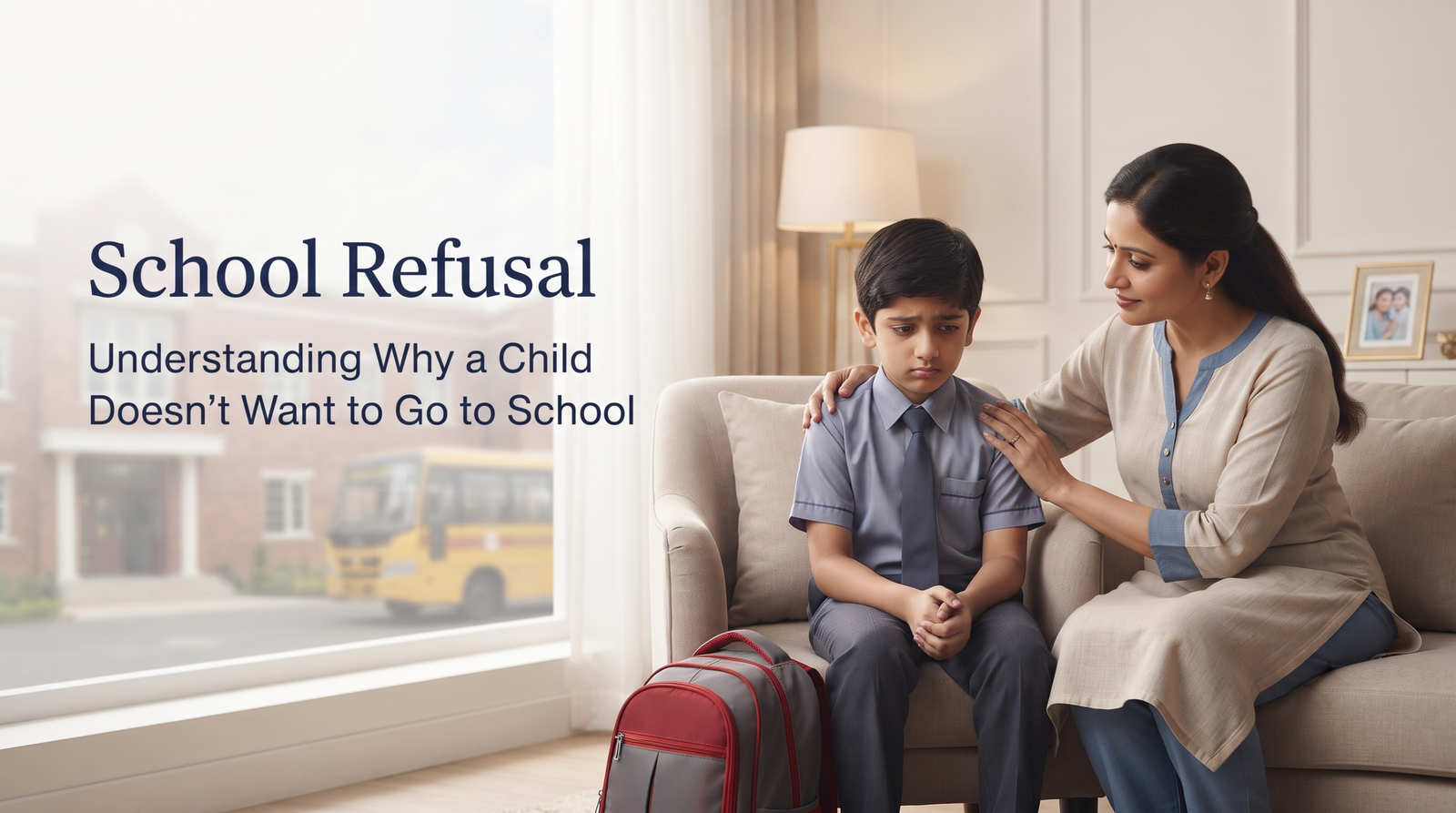
School Refusal: Helping Your Child Feel Safe Going Back to School
“My child says they can’t go to school, and I don’t know what to do.”
If you’ve heard this at your own breakfast table, you’re not alone, and it isn’t a sign that you’ve failed as a parent. School refusal is more common than most people realise, and with the right support, it can be overcome.
What Is School Refusal?
School refusal is when a child or teenager has persistent difficulty attending school, or can’t stay once they’re there, because of emotional distress. This is different from truancy. A child who skips school to hang out with friends is avoiding school by choice. A child with school refusal is typically overwhelmed by anxiety, fear, or low mood, and they often want to go but feel unable to.
Signs to Look For
Every child is different, but common signs include:
- Frequent complaints of stomach aches, headaches, nausea, or fatigue, especially on school mornings
- Tears, tantrums, or panic when it’s time to leave for school
- Pleading to stay home, or begging not to be sent
- Symptoms that disappear on weekends and holidays
- Frequent requests to visit the nurse or call home during the day
- Withdrawing from friends and activities
- Sleep problems, irritability, or clinginess
- Falling grades or reluctance to talk about school
Why Does It Happen?
School refusal rarely has a single cause. It is usually a mix of factors, such as:
- Anxiety: separation anxiety, social anxiety, or generalised worry
- Academic pressure: fear of exams, failure, or being judged
- Social difficulties: bullying, friendship conflicts, or feeling left out
- Low mood or depression
- Changes or transitions: a new school, moving house, family changes, or loss
- Learning or sensory difficulties that make school feel overwhelming
- Neurodiversity, such as ADHD or autism, where school environments may not fit the child’s needs
Understanding the why behind your child’s refusal is the first step toward helping them.
Why Early Support Matters
The longer a child stays away from school, the harder returning often becomes. Avoidance brings short-term relief, but it strengthens anxiety over time and can affect learning, friendships, and confidence. Early, gentle support can prevent this cycle from taking hold.
How I Can Help
My approach is warm, collaborative, and tailored to your child and family. Support may include:
- A thorough assessment to understand your child’s triggers, strengths, and worries
- Evidence-based therapy such as Cognitive Behavioural Therapy (CBT) to help children understand and manage anxious thoughts and feelings
- Gradual, supported exposure to help your child rebuild confidence in returning to school, at a pace that feels manageable
- Parent guidance so you feel equipped to respond calmly and consistently at home
- Coordination with the school to create a supportive return plan, including any adjustments your child may need
- Skills for managing stress, such as relaxation, problem-solving, and communication skills
[Add your qualifications, experience, and any specific methods you use here.]
What Parents Can Do Right Now
While you’re seeking support, these steps can help:
- Stay calm and listen. Let your child know their feelings are real and that you want to understand.
- Avoid blame or punishment. Shame tends to increase anxiety, not reduce it.
- Keep routines predictable. Consistent sleep, meals, and morning routines help.
- Encourage, don’t force. Be gently firm about returning to school while showing empathy.
- Keep in touch with the school. Work with teachers and counsellors as a team.
- Look after yourself. Your own calm is one of your child’s strongest supports.
When to Seek Professional Help
Consider reaching out if your child:
- Has missed multiple days of school or avoids school regularly
- Shows ongoing physical complaints with no medical cause
- Seems persistently anxious, sad, or withdrawn
- Is struggling more as time goes on, despite your efforts
You don’t need to wait until things feel unmanageable. Reaching out early is a sign of care, not failure.
FAQ's
Is school refusal the same as laziness or bad behaviour?
No. It is driven by genuine emotional distress, not defiance or laziness.
Will my child grow out of it?
Some children improve with time, but for many, avoidance grows without support. Early help leads to better outcomes.
How long does therapy take?
This varies by child and situation. Many families see progress within a few months, though some need longer. We’ll review progress together regularly.
Will you speak to my child’s school?
With your consent, yes. Working with the school often makes a big difference.
Can parents be involved in sessions?
Absolutely. Parents are an important part of the process.
Take the First Step
Your child doesn’t have to face this alone, and neither do you. If school mornings have become a struggle, I’d be glad to help your family find a way forward.
Book Your Consultation with Dr. Priyanka Kalra, Psychiatrist
If school mornings have become a daily struggle, you don’t have to manage it alone. Dr. Priyanka Kalra, a psychiatrist in Ludhiana, can help you understand what is behind your child’s school refusal and guide your family toward a calm, practical plan for getting back to school.
In your consultation, you can expect:
- A caring, unhurried conversation about your child’s worries and your concerns
- A clear understanding of what may be driving the school avoidance
- A personalised treatment plan, including therapy, parent guidance, and medical support if needed
- Guidance on working with your child’s school for a smooth return
Early support makes a real difference. Take the first step today.