- +91 9501032237
- support@globalchildwellness.com
- 127, I - Block, Sarabha Nagar, Ludhiana, Punjab 141002
- +91 9501032237
- support@globalchildwellness.com
- 127, I - Block, Sarabha Nagar, Ludhiana, Punjab 141002
Search

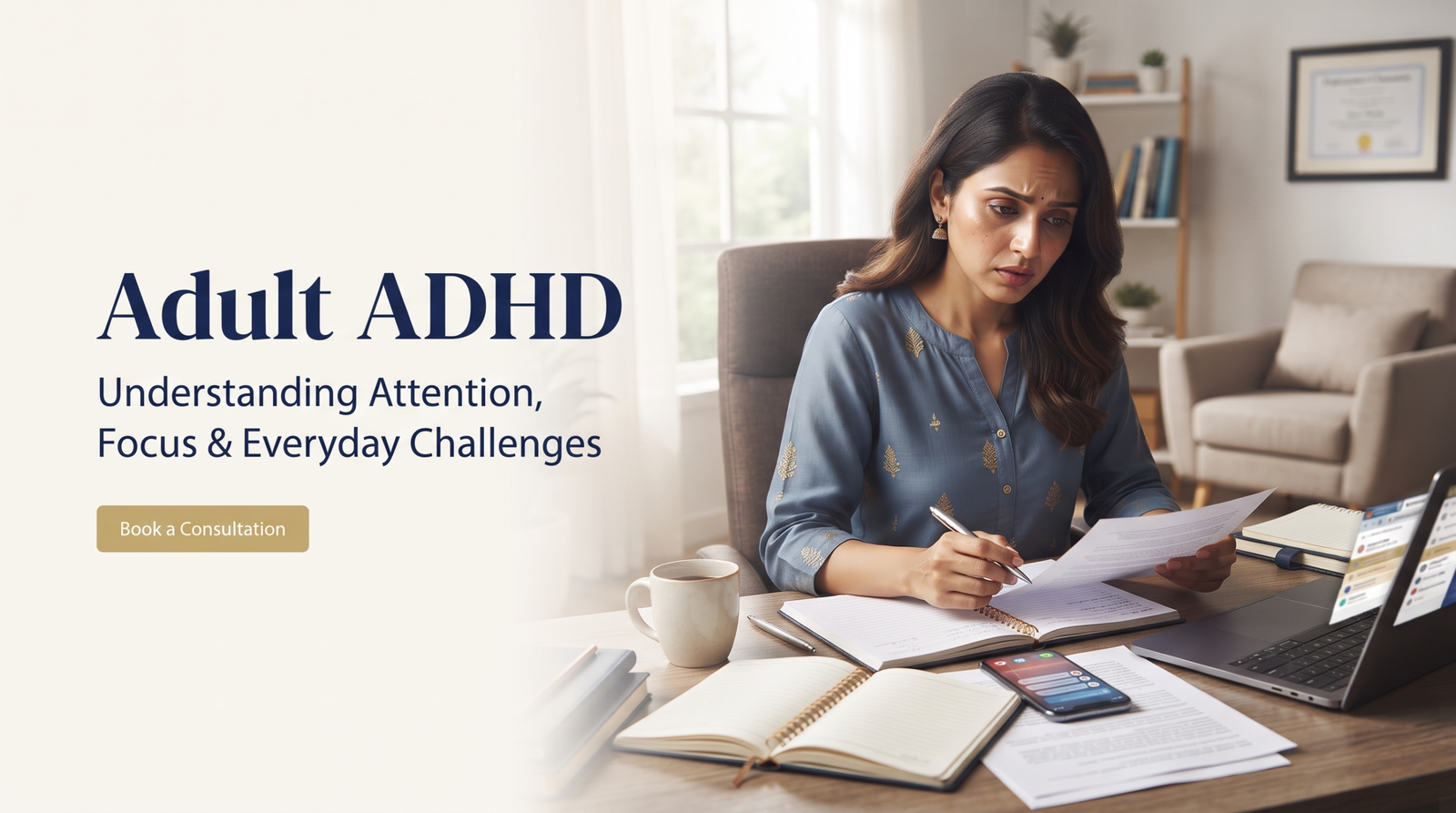
Adult ADHD: Diagnosis, Treatment, and Practical Support
Do you start tasks but struggle to finish them? Miss deadlines despite your best effort? Feel restless, scattered, or constantly behind? You may not be lazy or careless. You may have adult ADHD, a common and treatable condition that is often missed for years.
What Is Adult ADHD?
ADHD is a neurodevelopmental condition affecting attention, impulse control, and activity levels. It starts in childhood, but many people are never diagnosed until adulthood. Some were seen as “bright but careless” or “dreamy” as children, and others developed coping strategies that worked until work, parenting, or life became more demanding.
ADHD is not a character flaw, a lack of willpower, or a result of poor upbringing. It reflects differences in how the brain manages attention, organisation, and emotions.
Signs and Symptoms in Adults
Adult ADHD often looks different from childhood ADHD. Hyperactivity tends to become inner restlessness, while attention and organisation problems become more noticeable.
- Chronic procrastination and difficulty starting tasks
- Trouble finishing projects, or jumping between tasks
- Poor time management, frequent lateness, and missed deadlines
- Forgetfulness, such as missed appointments, bills, or lost keys and phones
- Difficulty focusing in meetings, conversations, or while reading
- Feeling mentally restless, “always on the go,” or unable to relax
- Impulsive decisions, such as spending, interrupting, or quitting jobs suddenly
- Strong emotional reactions, low frustration tolerance, or quick irritability
- Disorganised home, workspace, or paperwork
- Hyperfocus on interesting tasks while neglecting others
How Adult ADHD Affects Daily Life
- Work: Underperformance, missed deadlines, difficulty with routine tasks, frequent job changes
- Relationships: Forgetfulness, interrupting, or emotional outbursts can strain partnerships and friendships
- Finances: Impulsive spending, late payments, and difficulty budgeting
- Mental health: Many adults with ADHD also experience anxiety, low self-esteem, or depression, often from years of feeling misunderstood
- Health and safety: Poor sleep, substance use, or risk-taking behaviour
Why Is Adult ADHD Often Missed?
- Symptoms are mistaken for stress, anxiety, or depression
- Women and high-achieving adults often mask or compensate for symptoms
- The inattentive type is less noticeable than hyperactive behaviour
- Many adults assume that “this is just who I am”
- Some are diagnosed only after their own child is assessed
Could I Have ADHD? Questions to Consider
- Have attention or organisation problems been present since childhood?
- Do they affect more than one area of life, such as work and home?
- Do you often feel overwhelmed by tasks others handle easily?
- Have you been treated for anxiety or depression with only partial improvement?
- Do close family members have ADHD?
If you answered yes to several of these, a professional assessment can bring clarity.
How Adult ADHD Is Diagnosed
Diagnosis is based on a thorough clinical evaluation. There is no single blood test or scan for ADHD. Assessment may include:
- A detailed history of symptoms from childhood to the present
- Review of work, academic, and relationship difficulties
- Standardised adult ADHD rating scales and questionnaires
- Input from a partner, parent, or close family member, with your consent
- Screening for other conditions that look like or occur with ADHD, such as anxiety, depression, bipolar disorder, sleep disorders, and thyroid problems
Treatment Approach
Treatment is personalised and often combines several elements:
- Medication: Carefully selected and monitored medicines can significantly improve focus, impulse control, and daily functioning. Options and doses are reviewed regularly.
- Cognitive Behavioural Therapy (CBT): Practical skills for time management, organisation, procrastination, and emotional regulation
- ADHD coaching and skills training: Systems for planning, prioritising, and following through
- Treatment of co-existing conditions, such as anxiety, depression, or sleep problems
- Lifestyle support: Regular exercise, healthy sleep, balanced nutrition, and reduced alcohol and caffeine
- Workplace guidance: Adjustments that help you work to your strengths
- Ongoing follow-up to keep treatment effective as your life changes
[Add Dr. Kalra’s qualifications, experience, and any specific areas of expertise here.]
Everyday Strategies That Help
- Use a single calendar and phone reminders for all appointments and deadlines
- Break large tasks into small steps, each with its own deadline
- Work in focused blocks of 20 to 30 minutes with short breaks
- Keep key items, such as keys and wallet, in one fixed place
- Reduce distractions by silencing notifications while working
- Exercise regularly, as it improves focus and mood
- Protect your sleep schedule
- Ask for support from family, colleagues, or a coach
Supporting a Partner or Family Member With ADHD
- Learn about ADHD so you can separate symptoms from intent
- Use shared calendars, reminders, and clear routines
- Communicate calmly, and be specific about requests
- Encourage them to seek assessment and treatment
- Look after your own wellbeing too
When to Seek Help
Consult a psychiatrist if you:
- Have long-standing difficulty with focus, organisation, or impulse control
- Are struggling at work, in relationships, or with finances despite effort
- Feel constantly overwhelmed, restless, or behind
- Have been treated for anxiety or depression without full improvement
- Recognise these symptoms in yourself after a child’s ADHD diagnosis
FAQ's
Frequently Asked Questions
Can ADHD develop in adulthood?
ADHD begins in childhood, but it may not be recognised until adulthood. Symptoms often become more obvious when responsibilities increase.
Is adult ADHD real, or just stress and poor habits?
It is a well-recognised medical condition. Unlike ordinary stress or habits, ADHD symptoms are persistent, began early in life, and affect multiple areas of functioning.
Can adults with ADHD succeed?
Absolutely. With the right treatment and strategies, many adults with ADHD excel in their careers and relationships, often using strengths such as creativity, energy, and problem-solving.
Is ADHD medication safe for adults?
When prescribed and monitored by a psychiatrist after proper assessment, ADHD medication is safe and effective for most adults. Your health history and response are reviewed regularly.
Is ADHD medication addictive?
When taken as prescribed under medical supervision, the risk is low for most people. Your psychiatrist will discuss any concerns about your individual risk.
Will I have ADHD forever?
ADHD is a long-term condition, but its impact can be greatly reduced with treatment and the right strategies.
Is the consultation confidential?
Yes. All consultations are private and confidential.
Book Your Consultation with Dr. Priyanka Kalra, Psychiatrist in Ludhiana
If you have spent years feeling scattered, overwhelmed, or misunderstood, an accurate diagnosis can change everything. Dr. Priyanka Kalra offers a caring, confidential space to assess your symptoms, answer your questions, and create a treatment plan that helps you focus, feel in control, and move forward with confidence.