- +91 9501032237
- support@globalchildwellness.com
- 127, I - Block, Sarabha Nagar, Ludhiana, Punjab 141002
- +91 9501032237
- support@globalchildwellness.com
- 127, I - Block, Sarabha Nagar, Ludhiana, Punjab 141002
Search

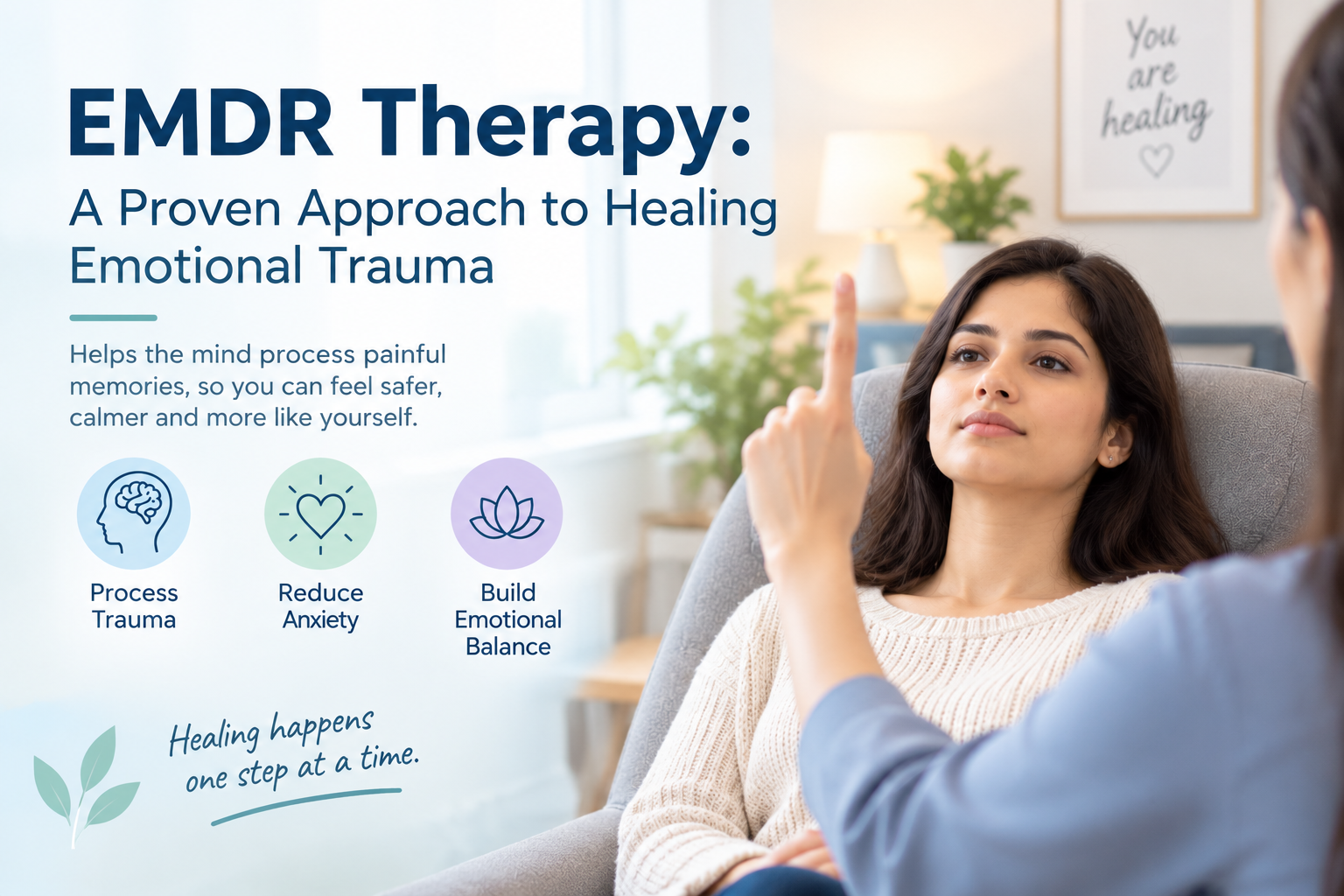
What Is EMDR Therapy?
Eye Movement Desensitization and Reprocessing (EMDR) is a structured psychotherapy approach designed to help people process distressing memories and reduce the emotional impact of traumatic experiences. It is commonly used in the treatment of Post-Traumatic Stress Disorder (PTSD) and may also help with certain anxiety-related symptoms and other difficulties associated with distressing life events.
Sometimes, painful experiences continue to affect a person long after the event has passed. They may experience unwanted memories, nightmares, fear, anxiety, or emotional distress. EMDR therapy helps individuals process these experiences in a safe, guided therapeutic setting, with the goal of reducing their emotional intensity.
How Does EMDR Therapy Work?
EMDR therapy involves recalling aspects of a distressing memory while engaging in bilateral stimulation, such as guided eye movements, alternating sounds, or gentle tapping. The therapist guides the process and helps the individual work through the thoughts, emotions, and physical sensations associated with the memory.
EMDR does not require individuals to describe every detail of a traumatic experience repeatedly. However, some discussion and recall of the experience are usually part of the process.
The goal is to help the brain process distressing memories so they become less emotionally overwhelming and easier to manage.
Who Can Benefit From EMDR Therapy?
EMDR may be helpful for people experiencing:
- Post-Traumatic Stress Disorder (PTSD): Distressing memories, nightmares, flashbacks, and trauma-related fear.
- Anxiety and emotional distress: Certain symptoms associated with painful or frightening experiences.
- Childhood trauma: Emotional difficulties connected to adverse early-life experiences.
- Accidents or sudden loss: Persistent distress following difficult or traumatic events.
- Fear and phobias: In selected cases, distress linked to specific experiences.
- Negative self-beliefs: Persistent feelings of guilt, shame, helplessness, or low self-worth associated with past experiences.
EMDR is not suitable for every person or every mental health condition. A qualified mental health professional can assess your symptoms and determine whether it is an appropriate treatment option.
What Are the Benefits of EMDR Therapy?
When appropriately recommended and delivered by a trained therapist, EMDR may help individuals:
- Reduce the emotional intensity of traumatic memories.
- Manage trauma-related anxiety and distress.
- Experience fewer intrusive memories and flashbacks.
- Develop healthier perspectives about themselves and past events.
- Improve emotional regulation and everyday functioning.
- Feel more confident when dealing with reminders of difficult experiences.
Results vary from person to person. Some people notice improvement within a limited number of sessions, while others require a longer course of treatment depending on their experiences, symptoms, and individual needs.
What Happens During an EMDR Therapy Session?
EMDR therapy typically follows eight phases, with the pace adapted to each individual’s needs.
- History Taking and Assessment: The therapist learns about your concerns, personal history, symptoms, and treatment goals.
- Preparation: You learn coping strategies and relaxation techniques to help manage emotional distress during and between sessions.
- Assessment: The therapist identifies the target memory, associated negative beliefs, emotions, and physical sensations.
- Desensitization: Bilateral stimulation is used while you focus on aspects of the distressing memory.
- Installation: The therapist helps strengthen a more adaptive, positive belief related to the experience.
- Body Scan: You notice whether any physical tension or discomfort remains connected to the memory.
- Closure: The session ends with techniques to help you feel grounded and emotionally settled.
- Reevaluation: At the next session, the therapist reviews your progress and determines the next steps.
Not every session looks the same, and preparation or stabilization may take additional time when needed.
Is EMDR Therapy Safe?
EMDR is an established treatment for PTSD and is recommended in several clinical guidelines for appropriately assessed patients. Like other trauma-focused therapies, it can sometimes bring up strong emotions, distressing memories, or temporary discomfort during or after a session.
A trained therapist monitors your response, teaches coping strategies, and adjusts the pace to support your emotional safety. People with complex trauma or other mental health concerns may need additional assessment, preparation, or coordinated treatment.
How Many EMDR Sessions Are Needed?
The number of sessions depends on the nature of the traumatic experience, the severity of symptoms, personal history, and individual treatment goals. Some people may benefit from a relatively brief course, while others need ongoing therapy.
Your therapist will discuss a treatment plan with you and review your progress regularly.
EMDR Therapy vs. Traditional Talk Therapy
Both EMDR and other forms of psychotherapy can support emotional healing, but they use different approaches.
Traditional talk therapies may focus on discussing experiences, identifying thought patterns, developing coping skills, and changing unhelpful behaviours. EMDR focuses on processing distressing memories through a structured protocol that includes bilateral stimulation.
The most suitable approach depends on your symptoms, preferences, history, and clinical assessment. In some cases, EMDR may be combined with other treatments.
Take the First Step Towards Emotional Healing
Living with the effects of a traumatic experience can be exhausting, particularly when painful memories continue to interfere with sleep, relationships, work, or daily activities. You do not have to navigate these challenges alone.
EMDR therapy may offer a structured way to work through distressing memories with the support of a trained mental health professional. An initial consultation can help you understand your symptoms, explore available treatments, and decide on the next steps at a pace that feels manageable.
Contact our mental health team to learn more about EMDR therapy and whether it may be suitable for your needs.
Your journey towards emotional well-being can begin with a conversation.
Frequently Asked Questions (FAQs) About EMDR Therapy
1. What is EMDR therapy used for?
EMDR (Eye Movement Desensitization and Reprocessing) therapy is primarily used to treat Post-Traumatic Stress Disorder (PTSD). It may also help individuals experiencing trauma-related anxiety, distressing memories, and emotional difficulties associated with painful life experiences.
2. How does EMDR therapy work?
EMDR therapy uses a structured approach that involves focusing on aspects of distressing memories while engaging in bilateral stimulation, such as guided eye movements, alternating sounds, or tapping. A trained therapist guides the process to help reduce the emotional distress associated with these memories.
3. Is EMDR therapy effective for PTSD?
Yes. EMDR is an evidence-based treatment recommended by several clinical guidelines for PTSD. Many people experience a reduction in trauma-related symptoms, although results vary depending on individual circumstances and treatment needs.
4. Can EMDR therapy help with anxiety?
EMDR may help with certain anxiety symptoms, particularly when they are connected to traumatic or distressing experiences. A mental health professional can assess whether EMDR or another treatment would be most appropriate.
5. How many EMDR therapy sessions are needed?
The number of sessions varies depending on the person’s history, symptoms, and treatment goals. Some individuals may benefit from a relatively short course of treatment, while others may need more sessions to address complex or multiple traumatic experiences.
6. Is EMDR therapy safe?
EMDR is generally considered safe when delivered by a properly trained mental health professional. However, recalling distressing memories may temporarily increase emotional discomfort. A therapist helps you develop coping skills and adjusts the treatment pace according to your needs.
7. Does EMDR therapy involve talking about trauma?
Yes, some discussion and recall of distressing experiences are usually involved. However, EMDR does not necessarily require you to describe every detail of the traumatic event repeatedly. Your therapist will guide the process and help you manage any emotional discomfort.
8. Is EMDR therapy suitable for everyone?
EMDR is not appropriate for every person or condition. A qualified mental health professional will assess your symptoms, personal history, current stability, and treatment goals before recommending it.
9. What is the difference between EMDR therapy and CBT?
Cognitive Behavioural Therapy (CBT) focuses on identifying and changing unhelpful thought patterns and behaviours. EMDR focuses on processing distressing memories using a structured approach that includes bilateral stimulation. Both can be effective treatments, depending on the condition and individual needs.
10. Can EMDR therapy help with childhood trauma?
EMDR may help people process distressing experiences from childhood that continue to affect their emotions, relationships, or self-esteem. Treatment should be tailored to the individual’s needs and delivered by a therapist trained in trauma-focused care.
11. What should I expect after an EMDR therapy session?
You may feel calmer, tired, emotionally sensitive, or temporarily unsettled after a session. Your therapist may recommend grounding techniques and other coping strategies to help you manage emotions between appointments.
12. Can EMDR therapy be combined with medication?
Yes. When clinically appropriate, EMDR therapy may be provided alongside medication prescribed by a qualified healthcare professional. Treatment decisions should be based on your symptoms, medical history, and individual needs.
13. How do I know if I need EMDR therapy?
If distressing memories, flashbacks, nightmares, or trauma-related anxiety are affecting your daily life, consider consulting a qualified mental health professional. They can assess your symptoms and discuss whether EMDR or another treatment may be suitable.
14. How can I find a qualified EMDR therapist?
Look for a licensed mental health professional with appropriate EMDR training and experience in treating trauma-related conditions. During your initial consultation, ask about their qualifications, treatment approach, and experience with concerns similar to yours.
15. Does EMDR therapy provide permanent results?
Some individuals experience lasting improvements after EMDR therapy, but outcomes differ. Progress depends on several factors, including the nature of the trauma, other mental health concerns, and ongoing life circumstances. Follow-up care may be helpful for some people.